Dining in Singapore is an immersion into a cultural crossroads where Chinese, Malay, Indian, and Western traditions meet on a single plate. For newcomers, navigating this vibrant landscape can feel as complex as it is delicious. Embarking on a culinary adventure here means discovering the best places to eat, from hidden gems to renowned establishments, making every meal an exciting exploration. The unwritten rules of etiquette, diverse ordering systems, and local customs can be overwhelming.
At SG Dining Guide, we believe that true appreciation of Singapore’s food comes from cultural understanding. This article is your guide to confident and respectful dining. Along the way, you’ll also discover award winning restaurants that exemplify the city’s world-class standards. We’ll explore hawker centre navigation, cross-cultural table manners, ordering strategies, payment customs, and the essential vocabulary you need to feel like a local at any table.
Mastering Singapore Hawker Centre Culture
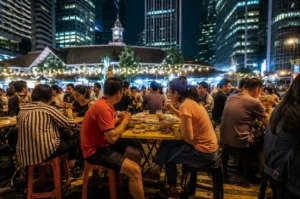
The hawker centre is the heart of Singapore’s community life, and it runs on a unique set of social codes. This hawker centre guide will help you navigate it smoothly and discover the delight of sharing diverse flavours with fellow diners in a vibrant communal atmosphere.
The “Chope” System: The famous chope culture Singapore is the local method for reserving a table. You’ll see tables “reserved” with a packet of tissues, a lanyard, or an umbrella. This is a widely accepted practice that allows a person to queue for food without losing their seat. To participate, simply place a non-valuable item on your desired seat before heading off to order.
Ordering and Payment: Approach the stall you want to order from directly. Most stalls have a clear queue system. You’ll typically place your order, pay in cash (small notes are appreciated!), and either wait for your food to be prepared or be given a buzzer. Don’t forget to check out the variety of drinks available at most hawker stalls, from traditional kopi and teh to refreshing local beverages.
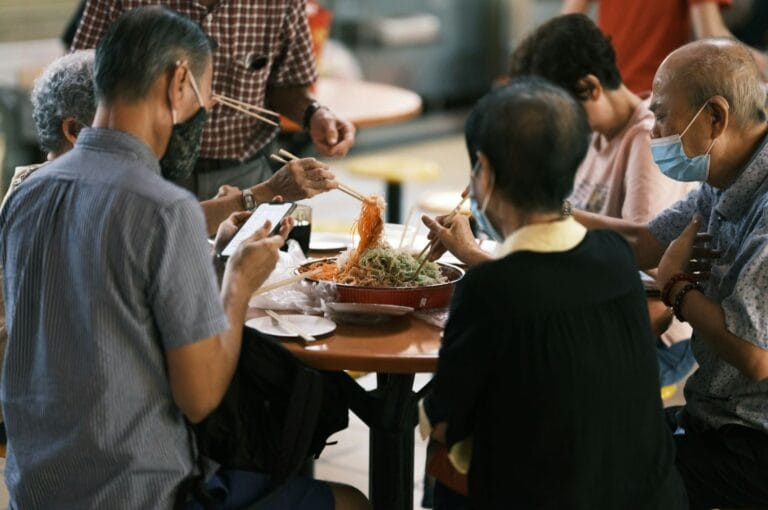
Sharing Tables: During peak lunch and dinner hours, space is limited. It is perfectly normal and polite to share a table with strangers. A simple, “Is this seat taken?” is all that is needed. Sharing a meal here is truly a delight, as you experience the communal spirit and the joy of connecting over good food.
Returning Trays: Most modern hawker centres and food courts now have a mandatory tray-return policy. Look for designated tray return stations. This is a sign of respect for the cleaners and the next diner.
Language Tips: While English is widely spoken, a little effort goes a long way. Simple phrases like “one plate of this” while pointing works perfectly. Knowing “Uncle” and “Auntie” as respectful terms for older hawkers is a warm gesture.
Menu Terminology: Hawker centre dishes are known for their rich and diverse flavours, offering something for every palate.
Cross-Cultural Table Etiquette
Singapore dining etiquette is a blend of traditions from its diverse population. Showing respect for these customs will enrich your experience. Take the opportunity to indulge in the unique customs and traditions of Singapore’s multicultural dining scene.
Chinese Dining Customs: When dining in a group, wait for the eldest person to start eating. When using a lazy Susan, be mindful of others and don’t spin it too fast. Never stick your chopsticks upright in a bowl of rice, as it resembles incense offered at funerals. It’s also customary to pour tea for others before filling your own cup.
Malay and Indian Dining: In many traditional Malay and Indian settings, it is common to eat with your right hand. The left hand is considered unclean, so it should not be used to handle food. Always respect halal customs when dining with Muslim friends. Food is meant for sharing, so take modest portions from communal dishes.
Noise Levels: The acceptable volume of conversation varies. Hawker centres are lively and bustling, while fine dining establishments expect quieter tones. A good rule is to match the energy of the room.
Ordering Like a Local
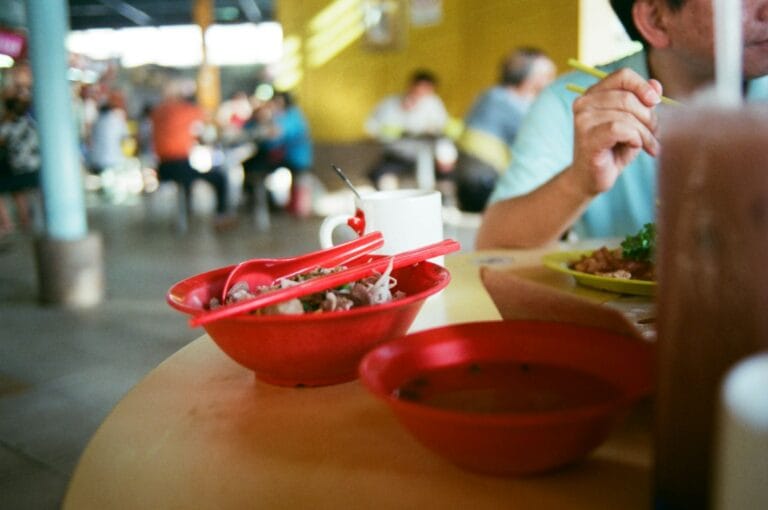
Knowing how to order food in Singapore can transform your meal. Beyond pointing at a picture, a few key terms will unlock a world of customization.
Menu Terminology: You’ll encounter terms like “economic rice” or “cai png,” which refer to a plate of rice where you point and choose from a wide selection of cooked dishes. “Nasi padang” is the Malay equivalent, offering a spectacular array of rich curries and sides. For local breakfast options, look for dishes like kaya toast, soft-boiled eggs, and kopi, and ask staff how to order them the local way.
Customization Phrases: Want your coffee less sweet? Ask for “siew dai.” Want it without any sugar? That’s “kosong.” You can also request “extra spicy” or “no MSG.”
Portion Sizes: Most one-dish meals at hawker centres are for one person. At zi char (local cook-to-order Chinese eateries) or family-style restaurants, dishes are meant for sharing. A good guide is to order one dish per person in the group, plus rice. Some popular restaurants and cafes require reservations, especially during peak hours.
Hidden Menus: Don’t be afraid to ask if there are any “specials.” Many places have off-menu favorites known only to regulars.
For a broader introduction to ordering food like a local, see our companion guide, “Dine Singapore: Your Complete Guide to the Lion City’s Food Scene.”
Payment Customs and Tipping Culture
Singapore has a straightforward approach to payment, which can be surprising for visitors from countries with a strong tipping tradition.
Singapore Tipping Culture: Tipping is not customary or expected. Most restaurants already include a 10% “service charge” in the final bill. This is not a direct tip to your server but goes to the business. You are not obligated to leave an additional amount.
When Locals Might Tip: In high-end establishments or for truly exceptional service, some Singaporeans might leave a small additional tip or round up the bill. However, this is a personal choice, not a social requirement.
Payment Methods: In hawker centres, cash is still king. In restaurants, cafes, and bars, cashless payments like credit cards, PayNow, and GrabPay are the norm. Many establishments also offer signature cocktails, which can be paid for using these various cashless methods.
Splitting Bills: While technology makes splitting bills easy, in some social circles, treating one another is common. For casual meals with friends, “going Dutch” is standard. In business settings, the host always pays.
Essential Dining Flavours Vocabulary
Learning a few Singlish food terms is your fastest way to navigate the Singapore food culture with confidence.
Essential Slang:
Dabao / Tapao: “Takeaway” or “to-go.”
Makan: The Malay word for “eat,” used universally.
Shiok: A powerful expression of deliciousness and satisfaction.
Sip: To enjoy a drink slowly; for example, visitors can sip on a classic Singapore Sling to experience a local beverage as part of their dining adventure.
Cooking & Texture Terms:
“Dry” vs “Soup”: Many noodle dishes come in these two versions.
“Black” vs “White”: Often used for carrot cake (a savory radish dish) or noodles, referring to the use of dark or light soy sauce.
QQ: Describes a wonderfully chewy and bouncy texture, often for noodles or tapioca pearls.
Common Misunderstandings:
“Carrot Cake”: This is not a sweet dessert. It’s a savory fried cake made from radish and rice flour.
“Chicken Rice”: This is a specific dish of poached chicken and fragrant rice, not just any chicken dish served with rice.
Navigating Common Culinary Adventure Dining Situations
Even with all this knowledge, you might find yourself in an unfamiliar spot. The most important thing to remember is that Singaporeans are generally forgiving and happy to help.
When Unsure, Just Ask: If you don’t know what something is or how to order, ask the stallholder or a fellow diner. People are often proud to share their food knowledge.
Handling Spice: If a dish is spicier than you can handle, it’s perfectly fine to order a sweet drink to cool your palate. Politely letting the staff know is also acceptable, though the dish usually cannot be changed.
If You Break Etiquette: Don’t worry. A polite smile and observant correction are all that’s needed. No one expects visitors to know every nuance.
Entry Requirements for Exclusive Venues: To enter certain exclusive restaurants or bars, especially those located inside casinos, guests may need to meet specific entry requirements such as age restrictions or paying a casino entry levy.
For more tips on dining in Singapore, view our additional guides and resources.
Conclusion
Understanding Singapore’s dining culture transforms a meal from a simple transaction into a meaningful cultural experience. These guidelines are not rigid rules to fear but tools to enhance your enjoyment and show respect. By knowing the customs, you can navigate any dining situation with confidence.
Dine with confidence, respect with understanding—Singapore’s table awaits you.