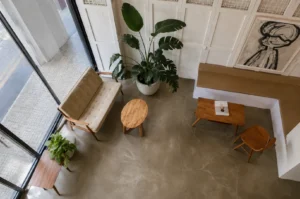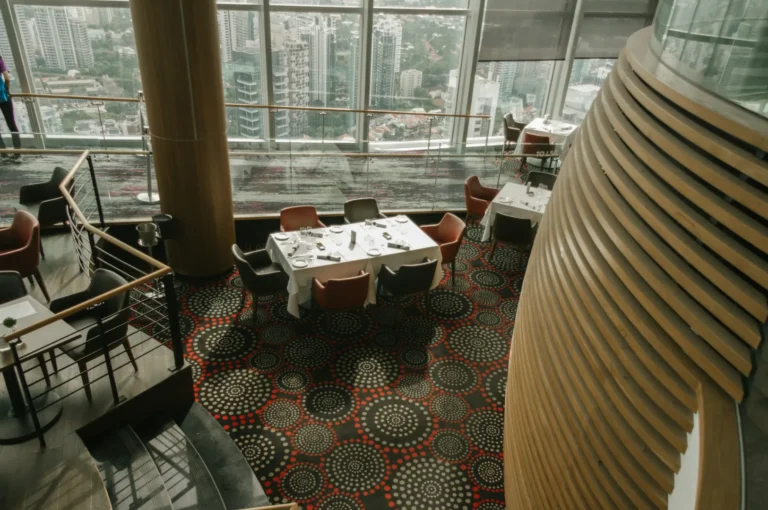
In Singapore, a table is rarely just a table.
It might sit along a narrow stretch of pavement where evening light spills across café windows. It might be tucked into a hawker centre where the air carries the scent of garlic, soy, and charcoal smoke. It might even be a small marble top in a quiet restaurant where conversations settle into the room like a familiar rhythm.
But wherever it is, the moment someone takes a seat, something begins.
Cities reveal themselves in small ways, and in Singapore, one of the clearest views of the city happens from a chair pulled up to a table. Around it, the everyday life of the island quietly unfolds. Office workers arrive in quick groups after the workday ends in Orchard Road as seen in Orchard Dining Guide. Couples linger over shared plates in Marina Bay. Friends gather with the easy familiarity of places they return to often.
Sometimes the table becomes a pause.
Singapore moves quickly. Trains arrive, crowds shift, office towers fill and empty again. But sitting down to eat has a way of softening that pace, if only for a while. The act of choosing a dish, waiting for it to arrive, sharing a few minutes with the people across from you; these moments gently slow the rhythm of the day.
It is a simple ritual, repeated thousands of times across the city.
From hawker centres humming with lunchtime crowds to neighbourhood cafés that fill as evening settles in, Singapore’s dining spaces carry a quiet kind of energy. Not loud, not dramatic, but steady. Familiar. The kind of energy that comes from people returning to the same places again and again.
Regular tables form their own stories over time.
A stall owner recognises a returning customer. A group of friends keeps their usual order. A server remembers which seat someone prefers by the window. These small recognitions turn ordinary meals into something slightly more personal, something that belongs to the neighbourhood as much as it belongs to the restaurant.
In this way, the city gathers around its tables.
A seat in Singapore is never entirely private. It sits within the larger movement of the city; footsteps passing outside, conversations drifting from nearby tables, the steady rhythm of plates and cups moving through the room. Yet within that shared space, each table still holds its own quiet moment.
And perhaps that is the quiet charm of dining here.
The food matters, of course. Singapore’s reputation as a food city is built on that. But often what lingers longest is not the dish itself, but the feeling of the moment around it; the laughter across the table, the warmth of the evening air, the quiet comfort of sitting still while the city moves just beyond the doorway.
All it takes is a seat.
Because from that seat, the city slowly comes into view.