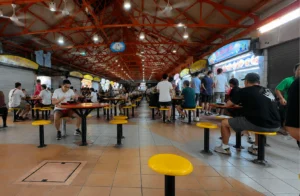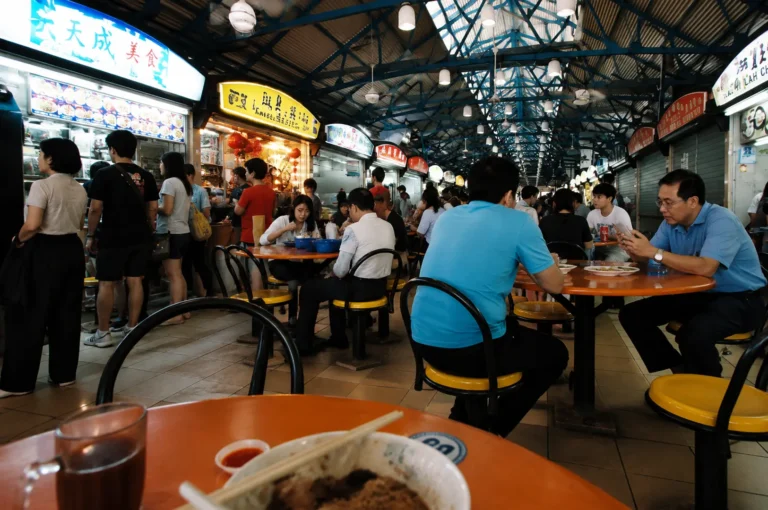
A hawker centre may look simple from the customer’s side.
We arrive, join the queue, place an order, wait a few minutes, and carry the food back to the table. If the dish is good, we talk about the flavour. If the queue is long, we talk about the wait. What we do not always see is the amount of work that happens before the first customer even appears.
A typical day often starts early. For some hawkers, the morning begins before sunrise, with ingredients collected, sauces prepared, stocks boiled, and meats or vegetables cut for the day ahead. By the time shutters open, much of the hard work has already been done. The stall may look quiet, but behind the counter, the rhythm has already started.
Opening is not just about turning on the lights. There are trays to arrange, utensils to prepare, drinks or condiments to check, and cooking stations to heat up. Every item has a place because speed matters once the crowd arrives. In a small stall, organisation is not optional; it is what keeps service moving.
When the first customers come in, the pace changes quickly. Breakfast regulars know what they want. Office workers may be rushing. Elderly residents might stop by at the same time every day. A good hawker learns these patterns. Some remember orders without asking. Some know who wants less chilli, more gravy, or no spring onion.
By lunch, the pressure usually builds. This is when a stall’s routine is tested. Orders come quickly, food has to remain consistent, and mistakes are costly because the queue keeps moving. From the outside, it may seem repetitive, but every plate still requires attention. The portion, heat, seasoning, and timing all matter.
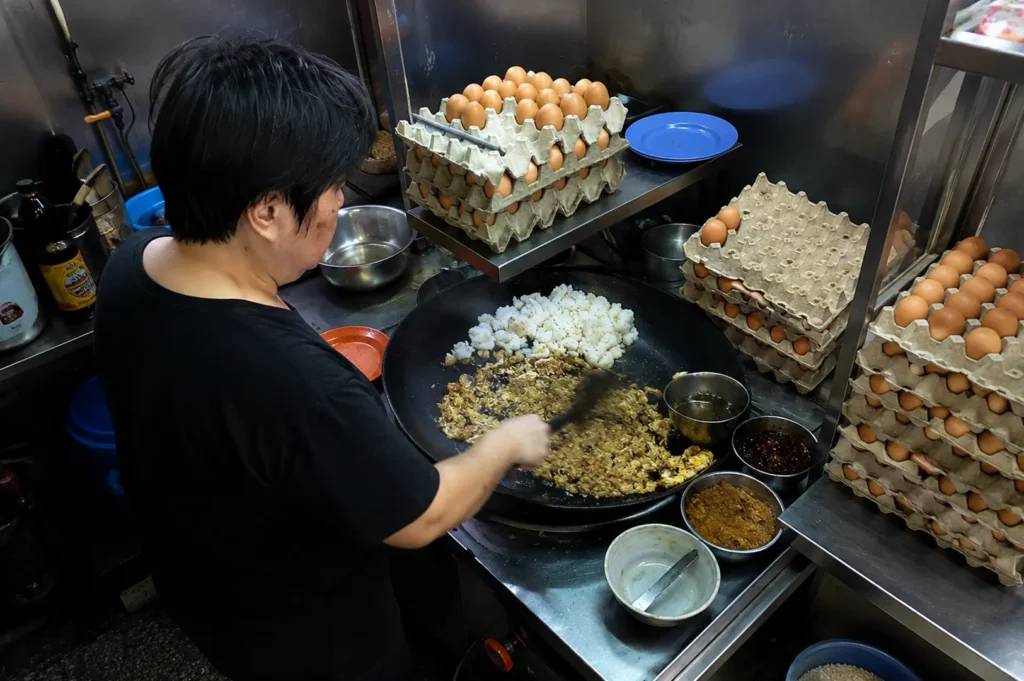
I think this is where hawker work is often underestimated. Customers may see affordability, but affordability does not mean the work is easy. Behind every plate is physical effort, long hours of standing, constant heat, and the pressure to serve food quickly without losing quality.
The quieter hours after lunch are not always restful. Some stalls use this time to prepare for the next crowd. Ingredients are topped up, surfaces are cleaned, and stock levels are checked. If something sells out too early, the stall risks disappointing customers. If too much is prepared, food and money are wasted.
Evening brings another rhythm. Families arrive. Regulars return after work. Some stalls begin winding down while others prepare for dinner or supper. The day stretches differently depending on the food served, but the pattern is familiar; serve, clean, restock, repeat.
Closing is rarely immediate. After the last order, there are pots to wash, counters to scrub, leftover ingredients to store, rubbish to clear, and cash or digital payments to settle. The shutters may come down, but the work does not end the moment customers leave.
A hawker stall runs on more than good recipes. It runs on discipline, stamina, and routine repeated day after day. That is why I believe we should look at hawker food with more respect. The meal may be quick for us, but for the people behind the stall, it is the result of an entire day of work.
The next time we sit down with a plate from our favourite hawker stall, it is worth remembering the day that began long before our order.
For more stories about Singapore’s hawker culture, dining habits, and everyday food spaces, visit SG Dining Guide.