In a nation celebrated for its hawker heritage and Michelin-starred dining, a quiet revolution is taking place behind closed doors—or rather, within high-tech industrial facilities. The shift toward Singapore food factory operations is reshaping the city’s gastronomic landscape, moving beyond the romanticized image of a solitary chef to the precision of industrial food production Singapore relies on today. This is not the sterile, flavorless mass production of old; instead, it is a sophisticated ecosystem where food tech solutions and tradition converge. As land scarcity and labor costs challenge traditional F&B models, these food factories have emerged as the backbone of our food security and culinary consistency. The thesis of this new era is clear: industrial innovation is no longer the enemy of culinary tradition but its most vital protector.
Evolution of the Food Manufacturing Industry in Singapore
The journey of the food manufacturing industry in Singapore reflects the city-state’s broader narrative of adaptation and efficiency. Historically, food production was decentralized, confined to the back-of-house kitchens of individual restaurants and stalls. However, the constraints of urban density and rising operational costs necessitated a paradigm shift. Today, the food manufacturing sector is supported by a robust government framework, including the Singapore Food Agency, encouraging the consolidation of food manufacturers and commercial food production into specialized hubs. In recent years, the food manufacturing industry in Singapore has evolved significantly to meet new demands. The industry includes about 1,000 manufacturers and generated over S$10 billion in output in 2018.
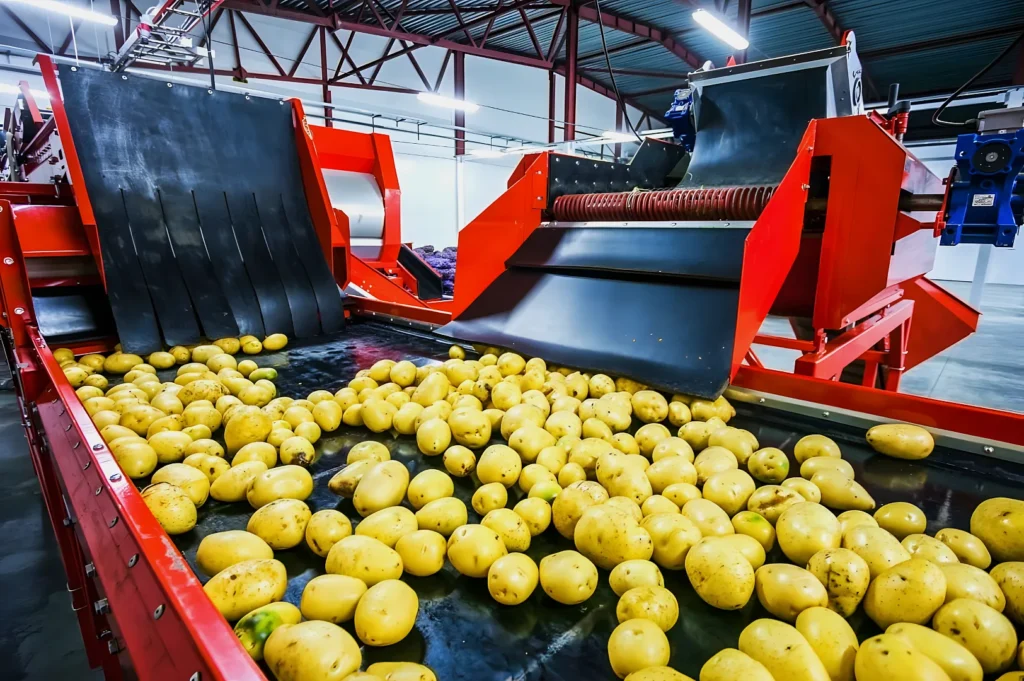
Driven by the need for scalability and the perennial challenge of manpower shortages, the industry has evolved from simple prep kitchens to advanced central kitchen Singapore facilities. These modern food factories come in various forms, ranging from ghost kitchens designed specifically for delivery-only brands to large-scale production facilities supplying marinades, sauces, and semi-processed ingredients to island-wide chains. Processed foods in Singapore include flavorings, sauces, ready-to-eat meals, noodles, deli meats, sausages, confectionery, and chocolates. Over 60% of manufactured food in Singapore is exported, enhancing global sales of local brands. Singapore’s food factories produce a variety of goods including sauces, snacks, beverages, meats, noodles, and chocolates. This evolution allows F&B operators to decouple production from service, maximizing expensive retail space for dining while handling labor-intensive preparation in optimized industrial zones, thus improving productivity and operational efficiency. Optimizing the production process and leveraging resources such as skilled talent and technology have been crucial for the industry’s development. Companies continually develop new products, technologies, and skills to adapt to changing market demands.
Food Tech Solutions and Innovation Transforming Production
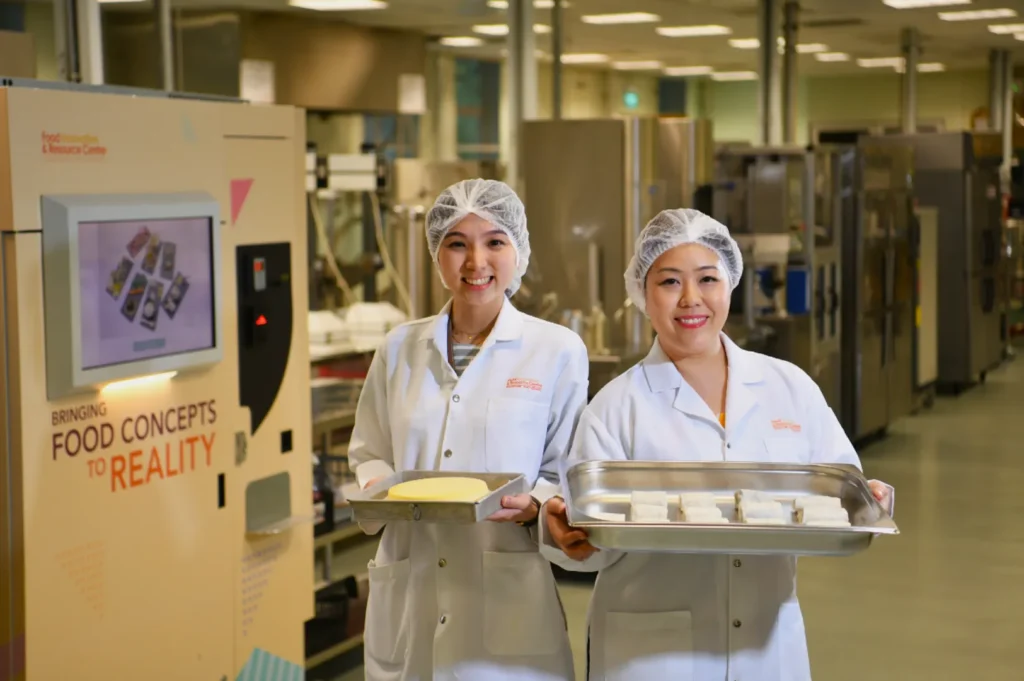
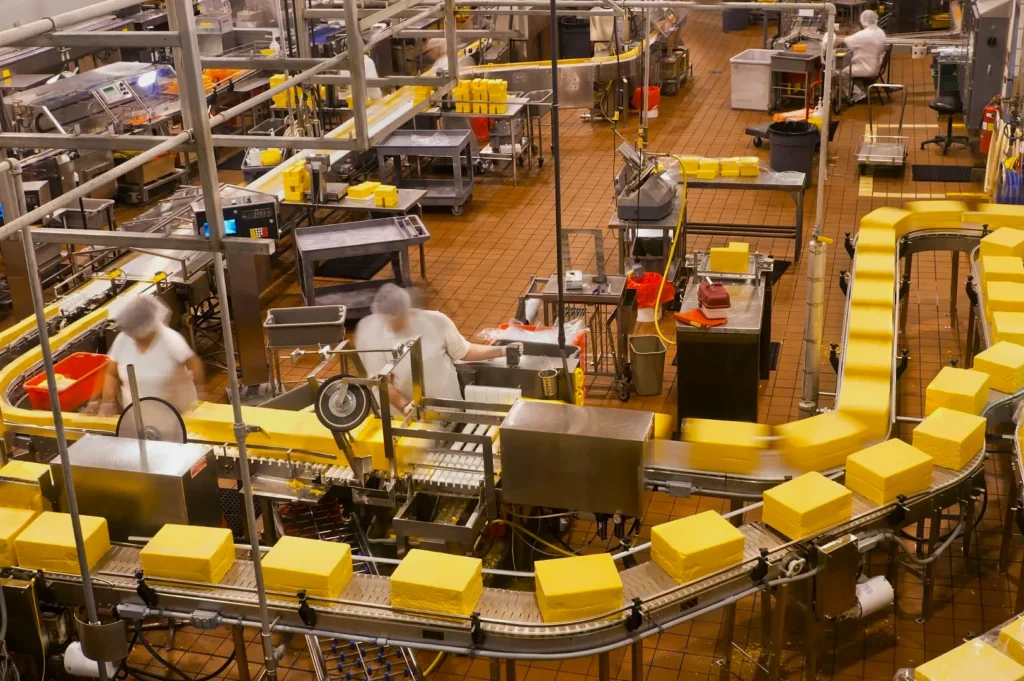
At the heart of this transformation is food innovation driven by cutting-edge food tech solutions. The image of rows of workers manually chopping vegetables is rapidly being replaced by automation and robotics. In these facilities, robotic arms portion ingredients with sub-gram precision, while automated cooking vessels replicate complex wok-frying techniques known as “wok hei” at scale. This integration of smart kitchen technology and the Internet of Things (IoT) allows for real-time monitoring of cooking parameters, ensuring consistent product quality that meets stringent quality control standards set by the Singapore Food Agency.
The food manufacturing industry in Singapore employs more than 48,000 workers and generates around $4.3 billion in annual revenue, accounting for about 1.1% of Singapore’s GDP.
Manpower and productivity programmes, as well as digitalisation, automation, robotics, AI, and data analytics, are being used to improve productivity across the industry. There are many jobs in the food manufacturing sector, including production line workers, quality control technicians, and process technicians. Workers must adapt and develop new job skills to remain relevant and employable, as production jobs will continue to be in demand, but attracting and retaining talent is challenging due to shrinking talent sources. The Skills Framework for Food Manufacturing promotes skills mastery and lifelong learning, and Workforce Singapore offers support for employers in redesigning jobs to uplift careers in the sector. Government-led initiatives play a key role in promoting skills development and enhancing food security.
Crucially, Singapore food manufacturing standards are among the highest in the world. Advanced quality control systems utilize sensors and data analytics to maintain rigorous food safety—a non-negotiable aspect of the local food industry. Food factories in Singapore are designed to meet stringent food safety standards and adhere to strict safety protocols set by the Singapore Food Agency to minimize risk. Services such as food safety testing, accreditation, and compliance assessments are essential in supporting both the food manufacturing and food service sectors. Food factories are also increasingly being used as central kitchens to improve quality control and reduce costs.
Furthermore, these factories are spearheading sustainable practices. By centralizing production, facilities can implement energy-efficient cooling systems and waste reduction protocols—such as converting food scraps into energy or compost—and adopt biodegradable packaging to meet evolving consumer preferences. Sustainability is now a key driver of product innovation and environmental responsibility within the food manufacturing industry. For food companies, this translates to consistency and scale, providing the reliability needed to expand into new markets and diversify revenue streams without compromising on the product quality that built their reputation.
Preserving Culinary Tradition at Scale with Food Manufacturers
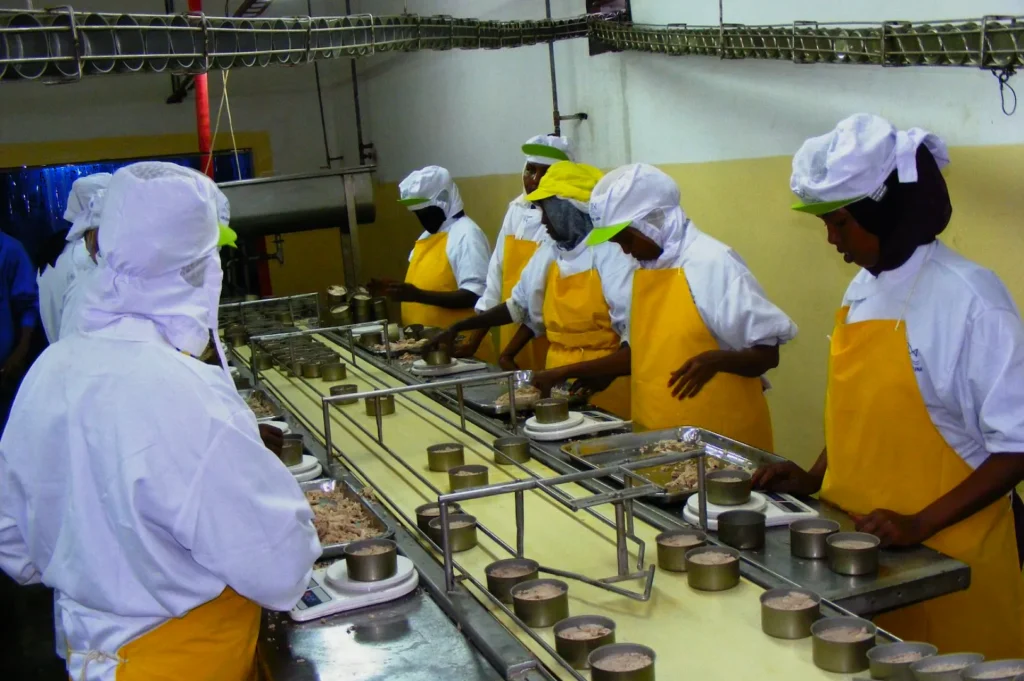
The most compelling aspect of food manufacturing in Singapore is its commitment to heritage. There is a concerted effort to ensure that scaling up does not mean watering down. Food manufacturers and technologists work closely with veteran hawkers and traditional chefs to digitize recipes, translating a pinch of this and a handful of that into precise, scalable formulas. This collaboration ensures that the soulful flavors of heritage dishes are preserved even when produced in commercial kitchens.
At the same time, Singapore food factory facilities are constantly developing new products and fostering new ideas in food production, artisanal development, and research. Catering services are also used to develop unique offerings that meet specific dietary requirements, helping companies differentiate their products in a competitive market.
We are seeing Singapore food factory facilities successfully producing artisanal food products—from complex spice pastes (rempah) to laborious kueh—that maintain the integrity of the original manual processes. Food factories are also adapting to changing dietary needs by producing food in smaller batches for ready-to-eat meals. By automating the repetitive, back-breaking elements of preparation, these factories allow culinary artisans to focus on flavor development and quality assurance. Far from eroding tradition, this industrial approach saves it from extinction, ensuring that labor-intensive heritage dishes remain accessible and affordable even as the generation of chefs who created them retires. It balances the ruthless efficiency of mass production with the nuance of artisanal technique.
Innovative local brands are leading the way: Prima Taste is recognized for its Singaporean instant noodles and easy-to-use meal kits for local dishes; Growthwell Foods is known for its plant-based product, HAPPIEE!, which mimics local flavors; KARANA Foods produces meat alternatives from whole-plant ingredients like jackfruit; and Oatside is a rapidly growing local brand producing oat milk and snacks with Asian flavor profiles.
Growing Demand and Impact on the Food Industry and Consumers
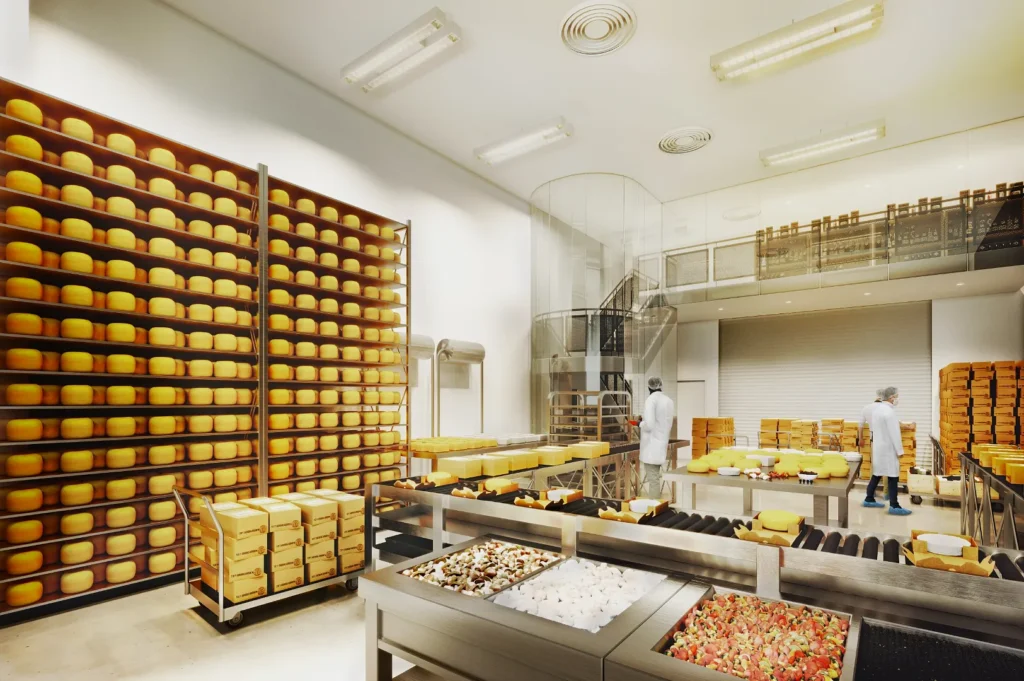
The rise of these food factories has fundamentally altered the dining landscape in Singapore. Industrial food production now serves as the engine room for restaurant expansion, enabling beloved local brands to open multiple outlets without the need for a full kitchen crew at every location. It has fueled the explosion of cloud kitchen business models, which rely entirely on centralized production to serve the delivery market efficiently.
Strategic partnerships and international expansion have enabled Singapore food manufacturers to access new customers, diversify revenue streams, and adapt to changing consumer preferences. Beverages are a key segment of food products, with major exports including alcoholic beverages, milk powder, and chocolate or cocoa products. More than half of the food manufactured in Singapore is exported, reflecting the industry’s strong global reach.
Moreover, this infrastructure supports the broader food business ecosystem by making traditional cuisines more accessible. High-quality, factory-produced sauces and meal kits allow home cooks and smaller eateries to serve authentic flavors with ease. Essential services such as food safety testing, accreditation, and compliance assessments play a crucial role in supporting the food manufacturing sector and facilitating exports. Key players in Singapore’s food manufacturing industry include Nestlé, Olam, Fraser & Neave, and local heritage brands. Nestlé Singapore focuses on health, wellness, and sustainable sourcing, while Wilmar International stands as Asia’s leading agribusiness group operating across the entire value chain. Yeo Hiap Seng pioneered the packaging of Asian drinks in Tetra Pak cartons, setting an industry benchmark. The JTC Food Hub @ Senoko exemplifies modern, purpose-built food factories that drive innovation and efficiency. The L’earth Queen Bee Project, supported by EnterpriseSG, helps food businesses expand into Vietnam, further strengthening Singapore’s position in the regional market.
Beyond our shores, these capabilities are creating export opportunities, allowing local food companies to package the “taste of Singapore” for a global audience, underpinned by the assurance of world-class safety standards and facilitated market access initiatives.
Singapore Food Factory: A Nutrition Hub for the Future
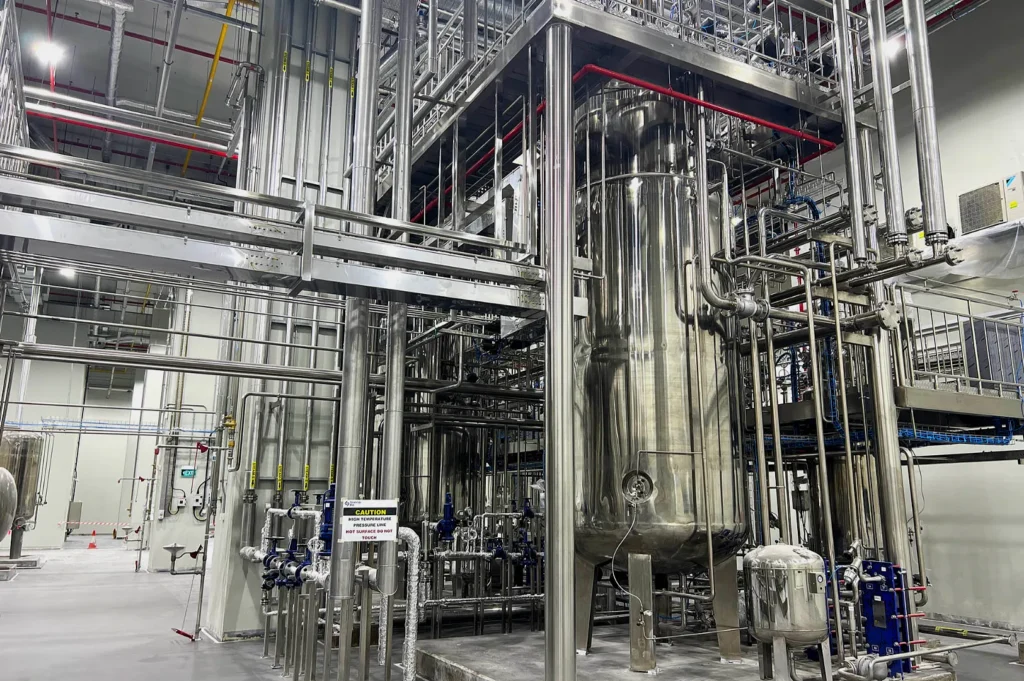
Singapore’s approach to food manufacturing is a testament to its pragmatism and respect for culture. The Singapore food factory scene is not replacing the chef; it is empowering them. As we look to the future, the marriage of industrial scale and culinary heritage will only deepen. By leveraging innovation to safeguard tradition, Singapore proves that authentic flavor and industrial efficiency can coexist, ensuring our food culture thrives in a modern, resource-constrained world.
This ongoing growth is expected to meet the increasing nutritional needs of Singapore’s population, with food factories acting as a central nutrition hub that supports sustainable food sources and responds to the growing demand for healthier, diverse, and convenient food products. Through continuous research and development, adoption of innovative solutions, and support from government partners and industry stakeholders, Singapore’s food manufacturing sector is well-positioned to stay ahead in Asia and beyond.
As Singapore’s food ecosystem continues to mature, diners are increasingly drawn to experiences that feel personal and intentional. Guides such as Intimate Dining Singapore: Best Private Dining Rooms for Memorable Gatherings reflect this growing appreciation for meaningful, well-crafted dining moments beyond mass consumption.