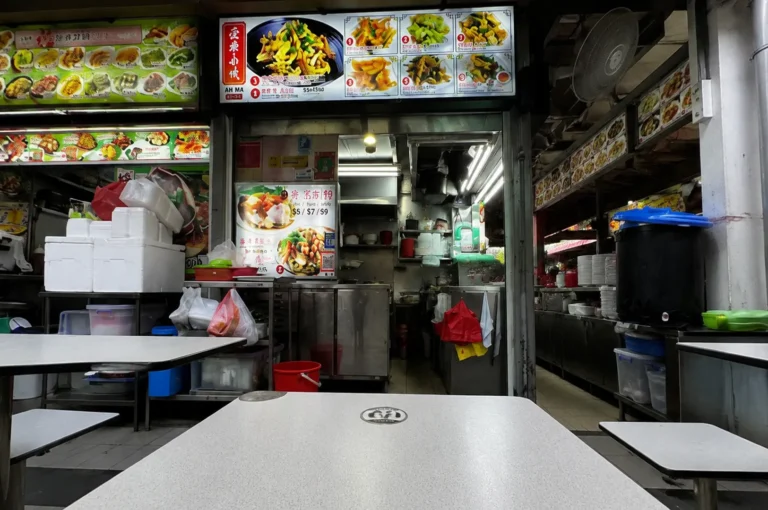
If you’ve been to Chomp Chomp Food Centre more than once, you already know this.
You don’t “walk in” and settle down. You enter, then you adjust.
The first thing that hits you is the noise level. It’s not background noise; it’s layered, constant, and alive. Orders being called out. Fans humming above your head. Chairs scraping. Someone shouting for extra chilli. It feels messy, but in a very controlled hawker way.
And here’s the thing most people don’t talk about; you’re already part of the system before you even order.
Finding a table is half the experience. Sometimes more.
You scan like everyone else, eyes moving fast, reading people instead of menus. A half-finished plate here, a tissue packet “reserving” a seat there. If you’ve eaten here enough, you know the rhythm. Nobody sits still for too long. You don’t relax immediately; you wait for movement.
That’s Chomp Chomp.
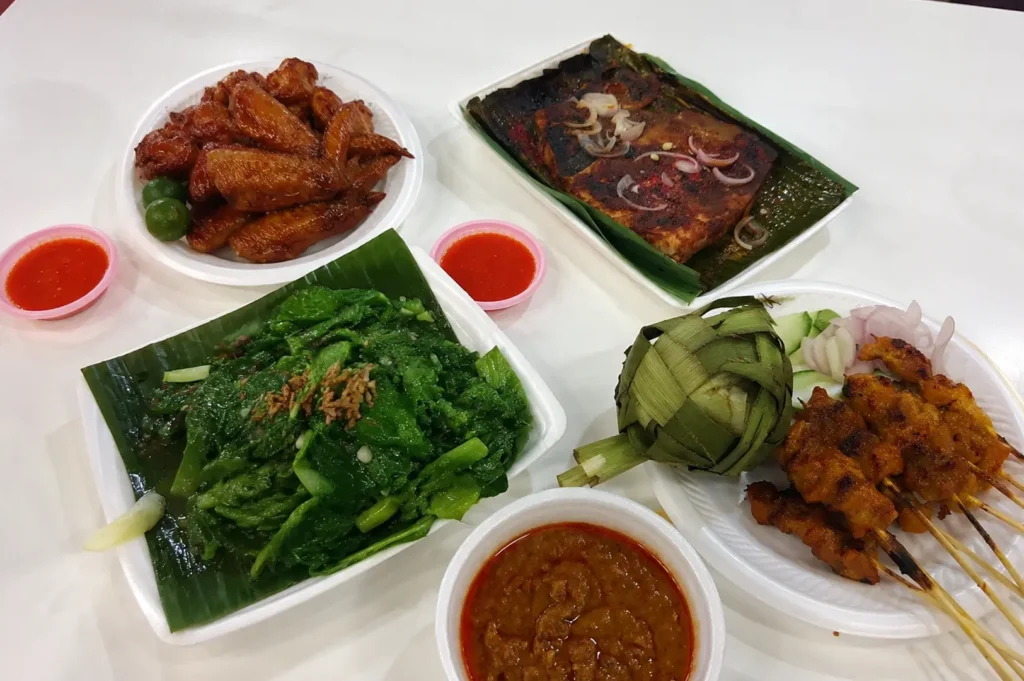
Now the food. Yes, it matters. Satay, BBQ wings, sambal stingray, carrot cake. Solid lineup. But I’ll be direct here; the food alone is not why people come back.
If you’re here for purely “best-in-class” hawker food, you’ll find better versions elsewhere with less chaos.
What Chomp Chomp does better is energy.
The stalls are close, the smoke hangs in the air, and everything feels like it’s happening at once. You don’t get a clean dining experience. You get a lived-in one. Plates arrive out of sequence. Drinks come mid-bite. Someone next to you is laughing too loud, and nobody really cares.
That shared-table situation is also key. You’re sitting closer to strangers than you probably would anywhere else in Singapore dining. But here, it works. Nobody is performing. Everyone is just eating.
If you want to see how that actually plays out on the ground, this guide to Chomp Chomp Food Centre gives a clearer sense of the vibe.
I’ve noticed something over the years; people don’t rush here, even when it’s crowded. They settle into the chaos instead of trying to control it.
That tells you a lot about the place.
If you’re a first-timer, here’s my honest read: don’t overthink the ordering. Just go for the classics and focus less on “what’s trending” and more on what’s actually moving fast at the stalls. That’s usually your best indicator of consistency.
What keeps Chomp Chomp relevant isn’t just the food stalls. It’s the fact that the entire space feels like a shared moment in motion. Nothing polished. Nothing overly curated. Just people eating, talking, and rotating through tables like clockwork.
And that’s why it sticks.
You don’t remember Chomp Chomp because of a single dish. You remember it because you had to navigate it.
The crowd, the smoke, the waiting, the noise; it all becomes part of the meal whether you planned for it or not.
And honestly, that’s the point.
For more real takes on Singapore’s hawker culture, supper spots, and dining experiences, visit SG Dining Guide.